|
On the morning of June 26, 1975, two FBI agents entered a compound on the Pine Ridge Reservation in South Dakota with the intent of issuing an arrest warrant.
Less than an hour later, they were both dead.
For over 50 years, the events of that day have been in dispute. And while there have been many questions about the fairness of his trial, the man who was ultimately held responsible for the killings was activist Leonard Peltier, who was sentenced to two consecutive life terms.
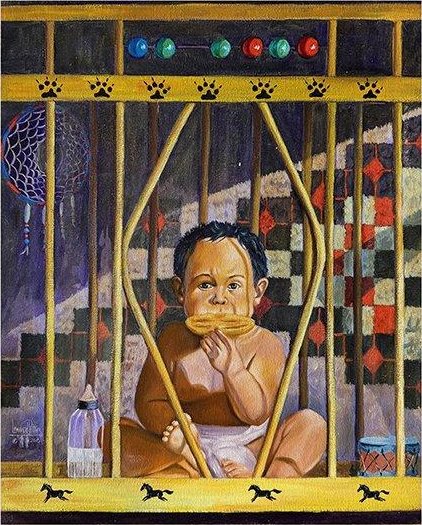
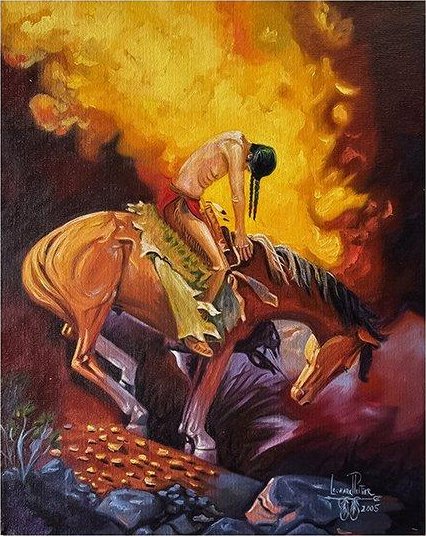
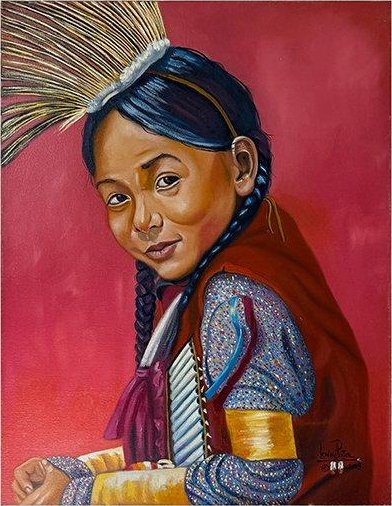
In early 2025, Peltier was finally released from federal prison, as President Joe Biden commuted his sentence to home confinement, and he returned to the Turtle Mountain Band of Chippewa Indians in North Dakota. Over the course of his five decades behind bars, Peltier spent much of his time doing what he loved: making art. His paintings tell the story of his life, his experiences, and his people. |
|
Most people probably can’t imagine what it would be like to have to spend the rest of their lives locked up. In his 1999 memoir, Peltier, who has always maintained his innocence, said “To wonder every day, every hour, whether or not you will ever be free again is a very special form of torture.” Fortunately, he was able to rediscover art, which he began doing when he was a child.
Growing up very poor, Peltier’s family couldn’t afford any art supplies, so he would use old boxes or even just draw in the dirt in his yards. He would also carve pieces of wood he’d find. Once he got to school, Peltier said art was his best subject and where he got the best grades. Later on, as an activist, he painted political murals for an organization he worked for called the American Indian Movement.
Being sentenced to a life in prison didn’t stop Peltier from wanting to create. There he started taking art classes, and he learned how to improve his skills thanks in part to the help of fellow prisoners. It wasn’t always easy, however, as inmates needed to buy their own supplies, and sometimes it would take months before ordered materials came in or were issued by the prison. In addition to the creative and therapeutic aspects of painting, it also served a practical purpose, as proceeds from his paintings were able to pay some of his legal fees, as well as to support his grandchildren.
|